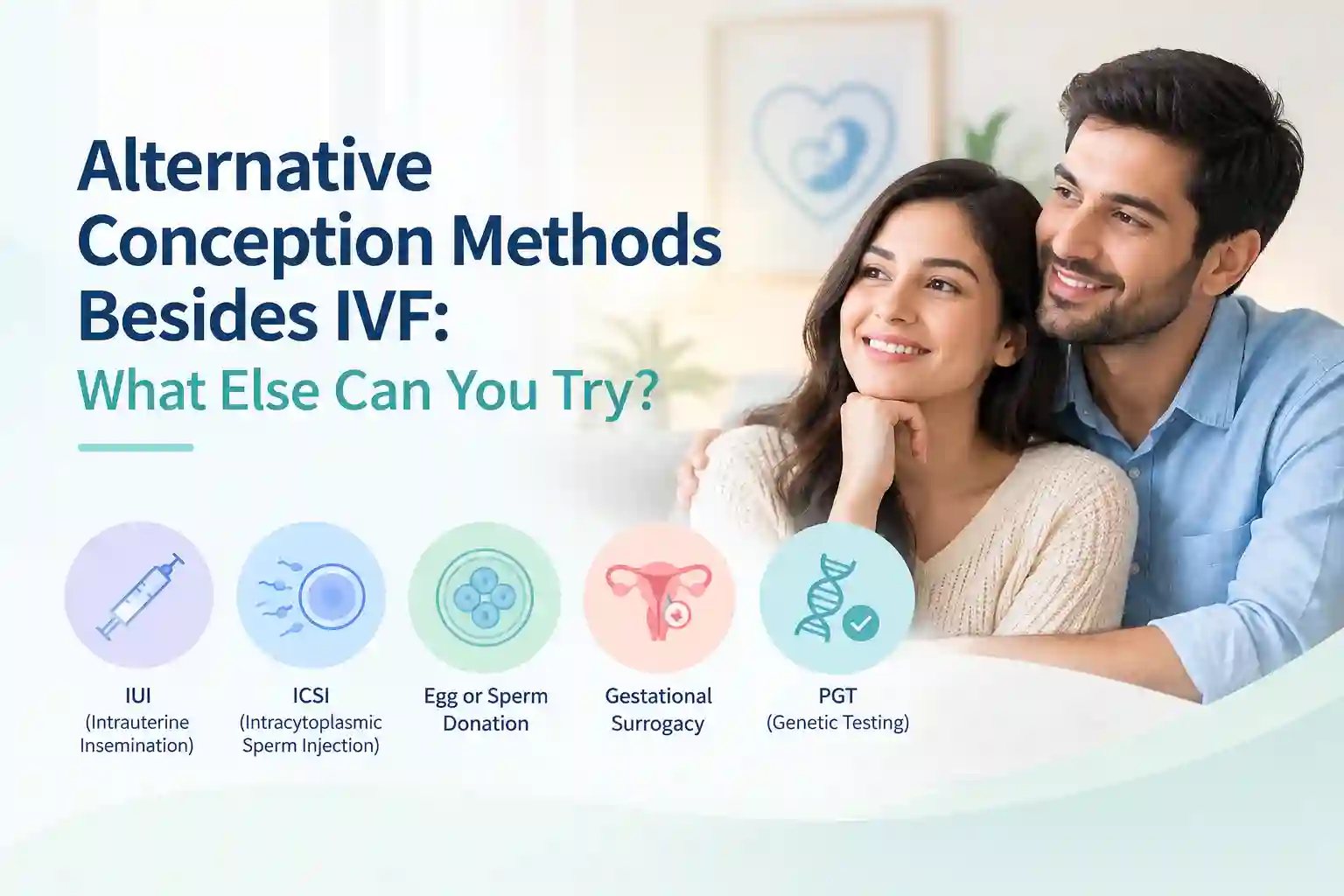
IVF has become an increasingly popular fertility treatment option for couples dealing with infertility. It’s a form of Assisted Reproductive Technology, where a man’s sperm cell fertilizes an egg outside the body, in a lab, and the resulting embryo is transferred into the uterus for normal pregnancy to continue.
While the technique has helped many couples become parents, it’s not the first-line treatment for all infertility cases. A fertility expert at Australian Concept looks at the underlying cause of your infertility to determine the most appropriate treatment option rather than recommending IVF straight away.
Many alternative conception methods besides IVF are available, and many have proven to be effective in helping couples conceive without requiring IVF cycles. So, if you are looking for alternatives to IVF, this post covers every possible modern fertility treatment (other than IVF) that can help you get pregnant.
What Are Alternative Conception Methods?
Alternative conception methods besides IVF mean all possible treatment options that can restore your fertility or help with conception without fertilizing an egg outside the mother’s womb.
The options range from simpler methods, such as timing intercourse around your ovulation days, to more complex surgical procedures to correct uterine anomalies or remove fibroids. There’s no single universal treatment that works for all.
Your healthcare provider will check your medical records and fertility history, and the following factors when comparing fertility treatments for your case.
- Mother’s Age: It gives your fertility doctor an important clue about how long they can safely explore non-IVF fertility treatments. Remember, advanced maternal age is linked to lower fertility treatment success rates.
- Duration of Infertility: How long you’ve been trying to get pregnant is another crucial factor that helps determine which treatment approach is suitable.
- Cause of Infertility: A fertility specialist will investigate the root cause of infertility. This helps them know the reason you have been unable to conceive. For most treatable cases, the treatment focuses on addressing the infertility issue.
- Previous Pregnancies: Your doctor will check your pregnancy history. They will want to know the number of times you got pregnant, any miscarriages, history of ectopic pregnancy, and whether you conceived naturally before or with fertility treatments.
- Ovarian Reserve: Tests like AMH and AFC give information about the remaining eggs in your ovaries, or the ovarian reserve. This helps your doctor assess how your ovaries might respond to fertility medications.
- Sperm Quality: Fertility evaluation also includes a semen analysis test that shows your partner’s semen quality, sperm count, morphology, motility, and other parameters.
- Fallopian Tube Health: The treatment decision depends on your fallopian tubes’ function. Open and functioning fallopian tubes may respond to alternative conception methods besides IVF, but blocked tubes may require fertilization outside the uterus.
Why IVF Is Not Always the First Treatment
IVF may be your best bet for bypassing the fallopian tubes or getting pregnant despite severe infertility issues, but it comes with many limitations.
Cost Considerations
The biggest challenge for those considering IVF is its cost. IVF is surprisingly expensive. The average cost of IVF in Pakistan ranges from PKR 750,000 to PKR 850,000, and this doesn’t even include the cost of genetic testing and embryo storage.
The cost can add up quickly if you need additional procedures or multiple cycles. So, it’s simply not a first-line treatment for every couple seeking fertility treatment in Pakistan.
Medical Indications
IVF is not a standard treatment for all infertility issues. Many mild-factor infertility issues, such as difficulty getting pregnant due to a polyp or a low sperm count, can be addressed with less-invasive treatment options.
Similarly, a woman with PCOS may benefit from lifestyle changes and medicines that can help regulate ovulation rather than IVF.
A Lengthy Procedure
IVF can be mentally and physically exhausting. It involves many carefully planned and executed steps to provide you with the best chance at pregnancy.
Each step must be carefully timed, coordinated, and accurately performed to reduce the risk of failure. The procedure begins with ovarian stimulation followed by egg retrieval, fertilization, embryo culture, and embryo transfer.
International Fertility Guidelines
The World Health Organization and many such reputable research centers have prioritized less-expensive and less-invasive fertility treatments. The guidelines suggest moving from simpler treatment approaches to complex options, such as IUI and IVF.
Alternative Conception Methods to Try Before IVF
When it comes to fertility treatment, the goal isn’t to avoid IVF, but to find the most suitable, age-appropriate treatment option that offers you the best chance at conception. Let’s explore common fertility treatments before IVF.
Fertility Medication
If you have been struggling to conceive because of an unpredictable ovulatory cycle, treatment could be as simple as regulating ovulation. Clomiphene Citrate and Letrozole are two powerful medications commonly used to stimulate your ovaries to produce and release eggs.
- Clomiphene Citrate: For those with unexplained infertility and PCOD, Clomiphene Citrate can be used. It increases the production of LH and FSH.
- Letrozole: Earlier, it was used when Clomiphene wouldn’t work, but research has shown that Letrozole may offer higher pregnancy and live birth rates. It temporarily lowers estrogen levels, which encourages your brain to produce more FSH and LH, thus stimulating follicular growth.
- Gonadotropins: If appropriate, Gonadotropins can be considered if the above medication doesn’t help. This injectable hormonal treatment requires careful administration and frequent monitoring, as it can increase the risk of multiple pregnancies and Ovarian Hyperstimulation Syndrome (OHSS).
Timed Intercourse with Ovulation Monitoring
The simplest treatment for infertility is timing intercourse correctly so that the eggs can be fertilized by sperm and you achieve natural pregnancy. It’s as simple as keeping track of your ovulation cycle and being sexually active a few days before and during ovulation.
This can be combined with treatment for underlying ovulation disorders if necessary. You can track ovulation with ovulation predictor kits, transvaginal ultrasounds, and hormonal assessments. Ultrasound scans can help show follicular growth. This conception method can be effective when:
- Ovulation is regular, but you can’t time your intercourse around ovulation
- Irregular ovulation, but it can be regulated with medication
- No major pelvic abnormalities or reproductive issues
Your menstrual pattern itself tells a lot about your ovulation. So, there may not be additional investigation required to track ovulation. Still, hormonal assessments may help give a detailed look at your ovulatory function.
Intrauterine Insemination (IUI)
If you need a more advanced approach than the above conservative treatments, but something less invasive than IVF, IUI might be an effective treatment choice. The procedure is pretty straightforward.
It involves processing sperm in the lab to get motile sperm cells, which are then placed directly into your womb. This increases the chances of natural pregnancy by reducing the distance sperm has to travel to reach the egg and fertilize it.
Who is IUI for?
IUI makes sense when you have mild infertility issues. For the procedure to be successful, your fallopian tubes must be open and working. That’s because sperm still has to travel to the tubes to penetrate the egg. Here’s who may benefit from IUI:
- Unexplained infertility
- Mild male-factor infertility
- Thick cervical mucus
- Ejaculatory dysfunction
It’s also a recommended treatment option for couples who can’t have sexual intercourse for any reason. The procedure can bypass a hostile cervical environment, which would otherwise kill a large proportion of sperm cells, thus preventing them from reaching the uterus.
Benefits
- It’s less invasive than IVF
- The procedure is shorter and can be done on an outpatient basis
- It’s less expensive
- It’s less stressful than IVF
Limitations
- Not a suitable fertility treatment for patients with tubal blockage
- May not work for those with severe male-factor infertility
- The doctors can’t select an embryo or perform genetic screening, as the entire procedure takes place inside the uterus.
Surgical Fertility Treatments
Surgical treatment could be considered if there’s an anatomical problem that’s interfering with your fertility. That said, not every reproductive anomaly detected on an ultrasound automatically requires surgical intervention.
It’s only considered when there’s adequate evidence that the anomaly is directly affecting your ability to conceive. Let’s check out the common conditions that may interfere with your fertility and can be corrected or managed with surgery.
Treatment for Endometriosis
Endometriosis is when tissue similar to your uterine lining grows in other places. It causes heavy, prolonged bleeding and severe cramps. The biggest issue is the inflammation, which can cause scar tissue and adhesions.
It can distort the pelvic anatomy and can also affect ovarian function. For example, adhesions near the fallopian tube can distort the tubal structure, which in turn can affect its ability to pick up an egg. Surgery to remove endometrial lesions can be a wise decision if it’s severely affecting your fertility.
However, ovarian surgery can negatively affect your ovarian reserve, which is why alternative treatment options may be considered before surgical removal of endometriomas.
Removal of Fibroids
Fibroids are non-cancerous uterine growths and another common factor that can affect a woman’s fertility. However, not every fibroid interferes with conception. Submucosal fibroids and large intramural fibroids can be problematic, as they can distort the uterine cavity, affect blood flow, and might block the tubes.
However, those located completely within the uterine wall or outside the uterine surface do not usually affect implantation or fetal growth. Surgical removal is needed once your gynecologist confirms that they are the leading cause of your infertility.
Tubal Surgery
If there’s mild blockage in the fallopian tubes, a surgical repair may be considered. But for more extensive disease that completely blocks the tube or makes reconstruction challenging, IVF can be a more appropriate decision. You can become pregnant with a single functioning tube, but if both are damaged, surgical repair may be necessary, especially if you want to conceive without IVF.
Hysteroscopy
Hysteroscopy is an advanced, minimally invasive surgical procedure that can be used for diagnostic or treatment purposes. For unexplained infertility, a healthcare professional may perform hysteroscopy, where they insert a thin, lighted tube through your cervix into the uterus.
It helps detect uterine polyps, fibroids, endometriosis, and other anomalies. If these growths seem removable, they can be removed within the same operation. However, hysteroscopy doesn’t guarantee restoring your fertility. It can only address the issues that could be interfering with implantation or pregnancy growth, but cannot reconstruct damaged tubes or help with male-factor infertility.
Lifestyle Changes That May Improve Fertility
Sometimes, correcting the lifestyle factors that might contribute to infertility can be the simplest method to restore your fertility. That said, you must set realistic expectations.
Lifestyle adjustments can support your reproductive health, but changing your diet or exercising more cannot reverse tubal blockage, treat endometriosis, or remove fibroids. You can work on things that are controllable or modifiable, such as:
Weight Management
Both underweight and overweight people are linked to increased risk of infertility. Reducing a few pounds, especially if you have obesity or PCOD, can make a great difference in your metabolic health and ovulation pattern. In many PCOD patients, losing weight alone is adequate in regulating menstruation and managing other symptoms.
Quit Smoking
We’ve all heard smoking is bad for your lungs, but that’s not the only organ it hurts. Excessive smoking can interfere with your reproductive function too.
In women, smoking degrades egg quality, accelerates egg depletion, disrupts your hormonal function, and can even bring early menopause. In men, smoking can damage the DNA material within the sperm, reduce sperm quality, and can even lead to erectile dysfunction.
Avoid Alcohol
If you are planning to conceive, both you and your partner must reduce, or better yet, avoid alcohol altogether. Just like smoking, alcohol consumption can negatively affect hormonal balance and increase oxidative stress.
In men, heavy drinking can damage sperm health and reduce testosterone production, and can even decrease libido or cause erectile dysfunction,
Regulate Your Sleep Cycle
One of the most overlooked yet critical factors affecting your fertility is sleep. It helps regulate your reproductive hormones, especially testosterone production in men. It also reduces stress hormones and melatonin, which helps support egg quality. So, if you have a disrupted sleep cycle, follow a consistent bedtime routine to support your reproductive health.
Exercise Regularly
Moderate exercise is believed to support your reproductive function, manage your weight, as well as, support cardiovascular, and metabolic health. It regulates the main reproductive hormones in men and women while supporting better blood circulation and reducing oxidative stress.
However, high-intensity workouts, especially when combined with a calorie-deficit diet, can negatively affect ovulation, testosterone production, and sperm quality.
Stress Management
Stress increases cortisol and adrenaline, which can temporarily suppress your reproductive hormones, including estrogen and progesterone. Not being able to conceive can worsen stress, which in turn keeps disrupting your reproductive hormonal balance.
This ongoing cycle can make conception difficult. However, stress alone cannot make someone infertile, but chronic stress can affect sleep quality, eating habits, and your lifestyle choices, which can interfere with your reproductive health.
Nutrition
A healthy diet is also important for your reproductive health. Your diet must have a sufficient amount of protein, omega-3 fatty acids, Vitamin D, folic acid, iron, calcium, etc. Your fertility expert may recommend a folic acid supplement to reduce the risk of neural tube defects in the baby after conception.
Treatment for Male Infertility
Assuming that a woman is responsible for infertility is nothing but a myth. In many cases, male partners have underlying reproductive health issues or hormonal problems that could be the cause of infertility in a couple.
That’s why, when you visit Australian Concept for fertility treatment, the fertility doctor will investigate both partners. Fertility evaluation for male partners begins with semen analysis. Depending on the test results, the fertility expert may decide on an appropriate treatment or recommend further testing.
Treatment depends on the cause of infertility.
Medication
Certain male-factor infertility causes are treatable with medication. For example, if the doctor suspects low sperm production because of hormonal imbalance, hormonal therapy can be tried first. If there’s an underlying infection, antimicrobial medication may be advised.
Varicocele Repair
Varicocele is when the veins around a man’s testes become enlarged. It doesn’t always affect fertility, but if it occurs with abnormal semen parameters, surgery to cut or tie off the affected veins could be an effective treatment choice. The procedure redirects blood through healthier veins, and in selected cases, it may improve semen parameters.
Sperm retrieval techniques (PESA, TESA, TESE)
Oligospermia or azoospermia are other causes of male-factor infertility. These occur when there’s very little or no sperm cells found in the man’s ejaculate. Azoospermia can be obstructive (sperm cells are produced but cannot be released in the ejaculate due to an obstruction in the transportation pathway) or unobstructive (sperm isn’t produced).
In such cases, sperm can be directly obtained from the epididymis, using a procedure called PESA (Percutaneous Epididymal Sperm Aspiration) or from testicles through TESA (Testicular Sperm Aspiration). In men with non-obstructive azoospermia, Micro-TESE (a surgery that removes a small portion of the testicular tissue) can be used to search for sperm cells.
Lifestyle Modification
While lifestyle changes cannot correct a major underlying fertility issue, they can support your reproductive health. These can make a difference in men who have habits that can interfere with their fertility. For example, excessive smoking, recreational drug use, alcohol consumption, a sedentary lifestyle, poor dietary choices, lack of proper sleep, and chronic stress can all indirectly contribute to infertility.
When IVF Becomes the Best Option
Alternative conception methods besides IVF may work for some, but exhausting all your savings on alternative fertility treatment options just so you don’t have to go for IVF is not a sensible decision.
Sometimes, trying IVF earlier makes more sense than sticking to other treatments and repeating the same non-IVF treatments. Certain conditions make IVF your best chance at pregnancy. Here’s when it may be an appropriate treatment choice.
Blocked Fallopian Tubes
It’s not possible to conceive naturally or through less-invasive treatments when both your fallopian tubes are blocked. Fertilization requires sperm to swim through the reproductive tract and reach the tube where it penetrates the egg.
IUI can help sperm travel faster, but if the tubes are blocked, it can’t reach the egg. IVF bypasses the tubes altogether, allowing fertilization to take place outside in a secure, regulated lab.
Severe Male Infertility
In severe male-factor infertility, ICSI (a procedure where a single healthy sperm cell is injected into an egg in a petri dish) can be the most suitable treatment choice. It’s especially recommended when a surgical procedure is used to extract sperm directly from the epididymis or testicles.
Low Ovarian Reserve
A low ovarian reserve automatically doesn’t make IVF necessary, but when combined with failed IUI and other fertility treatments and advancing maternal age, it can make IVF a more appropriate treatment.
Repeated Failed IU
If you have had multiple failed IUI cycles, your fertility expert may investigate the causes that led to the repeated failure and may also consider alternative fertility treatment choices rather than performing the same procedure repeatedly.
Severe Endometriosis
Endometriosis itself doesn’t cause infertility. However, severe endometriosis that distorts the pelvic anatomy, mainly the structure of the fallopian tubes, can make pregnancy difficult.
When these lesions distort the tubes or make it difficult for the egg to be picked up by the tubes or the sperm to reach the tubes, IVF may be a reasonable treatment choice.
Certain Genetic Conditions
If the mother or father is a carrier of certain genetic disorders or has gene mutations that can be passed on to the child, Pre-implantation Genetic Testing (PGT) may be required to reduce the risk of transferring a genetically diseased embryo.
For that, you may need to undergo IVF, where the embryos are created in the embryology lab. Once they have reached the optimal development stage, they are assessed under a microscope, and the healthy embryos that aren’t carriers of the gene mutations are selected for transfer.
Comparing Common Fertility Treatments
| Treatment | Best For | Invasiveness | Can They Lead to IVF? |
| Lifestyle Changes | Those who have modifiable lifestyle factors that affect their reproductive health, such as smoking, alcohol consumption, recreational drug use, or weight issues. | Extremely low | Yes |
| Ovulation Induction | Those with PCOS or other ovulatory disorders | Low | Yes |
| Timed Intercourse | Couples with unpredictable ovulation or difficulty timing the intercourse around ovulation | Extremely low | Yes |
| IUI | Certain cases of unexplained infertility, low sperm count, thick cervical mucus, and mild ovulation disorders | Low to Moderate | Yes |
| Fertility Surgery | Surgery to correct underlying reproductive health issues, such as reconstructing blocked fallopian tubes, endometriosis, and uterine abnormalities | Moderate to High | Yes |
| IVF | For couples with severe male-factor infertility, blocked fallopian tubes, embryo testing requirements, and unexplained infertility | More Invasive | Further IVF cycles may be required |
How Doctors Choose the Right Fertility Treatment
A fertility expert will run thorough investigations on both partners before determining a suitable fertility treatment option. Sperm analysis, blood work, ultrasounds, previous pregnancy or fertility test reports, and physical examinations are a few initial tests your doctor may need to determine the factors that are contributing to infertility.
FAQs
Is IVF the only fertility treatment available?
No, there are many advanced fertility treatment options, such as IUI, hormonal therapies, and surgery to treat uterine anomalies and other reproductive issues. They have helped many couples conceive.
What fertility treatment is usually tried before IVF?
Lifestyle modifications, hormonal treatment to restore ovulation, surgery to correct reproductive organ anomalies, and IUI may be tried before IVF.
Can IUI help me get pregnant without IVF?
Yes, for unexplained or mild fertility issues, IUI may be a useful treatment option.
Which fertility treatment has the highest success rate?
There’s no specific treatment that offers the highest success rate. The most appropriate treatment for you depends on the cause of your infertility.
Can lifestyle changes improve fertility naturally?
If lifestyle habits contribute to reduced fertility, modifying those can help improve your fertility.
How long should couples try before considering IVF?
There’s no specific number of IUI cycles or other treatments one can try before switching to IVF. Your fertility expert will evaluate your case and determine if you should move to a more invasive treatment.
Who is a good candidate for ovulation induction?
Women with ovulatory disorders or unpredictable ovulation might be good candidates for ovulation induction.
When is surgery recommended for infertility?
It’s recommended for uterine anomalies, fibroids, severe endometriosis, and other abnormalities that are treatable with surgery.
Can male infertility be treated without IVF?
In some cases, male-factor infertility can be treated with IUI and conservative treatment approaches.
How does a fertility specialist decide which treatment is best?
They check your fertility test reports and consider maternal age, miscarriage history, pregnancy history, and overall fertility status of both partners to decide on the most suitable treatment plan.







2 Comments
Muhammed Ahmed
Assalam o Allikum
MA SHA ALLAH we have 4 kids, 3 Daughter and 1 Son.
Physically both are fit.
we wish a baby boy for completing our family.
I am not a rich man. I am simple account assistant in a real estate farm and dose not afforded so much fees recently i have receive a comety PKRs 80,000/-
If these rupees the process are possible then Please contact me
We both are at the age of 40
Regards
Muhammed Ahmed
ACIMC Webmaster
Dear,
We have experienced Consultants at ACIMC. Please come for a first free consultation with coordinator doctors.
For an appointment please call on our UAN: 0304-111-2229, WhatsApp: 0309-333-2229