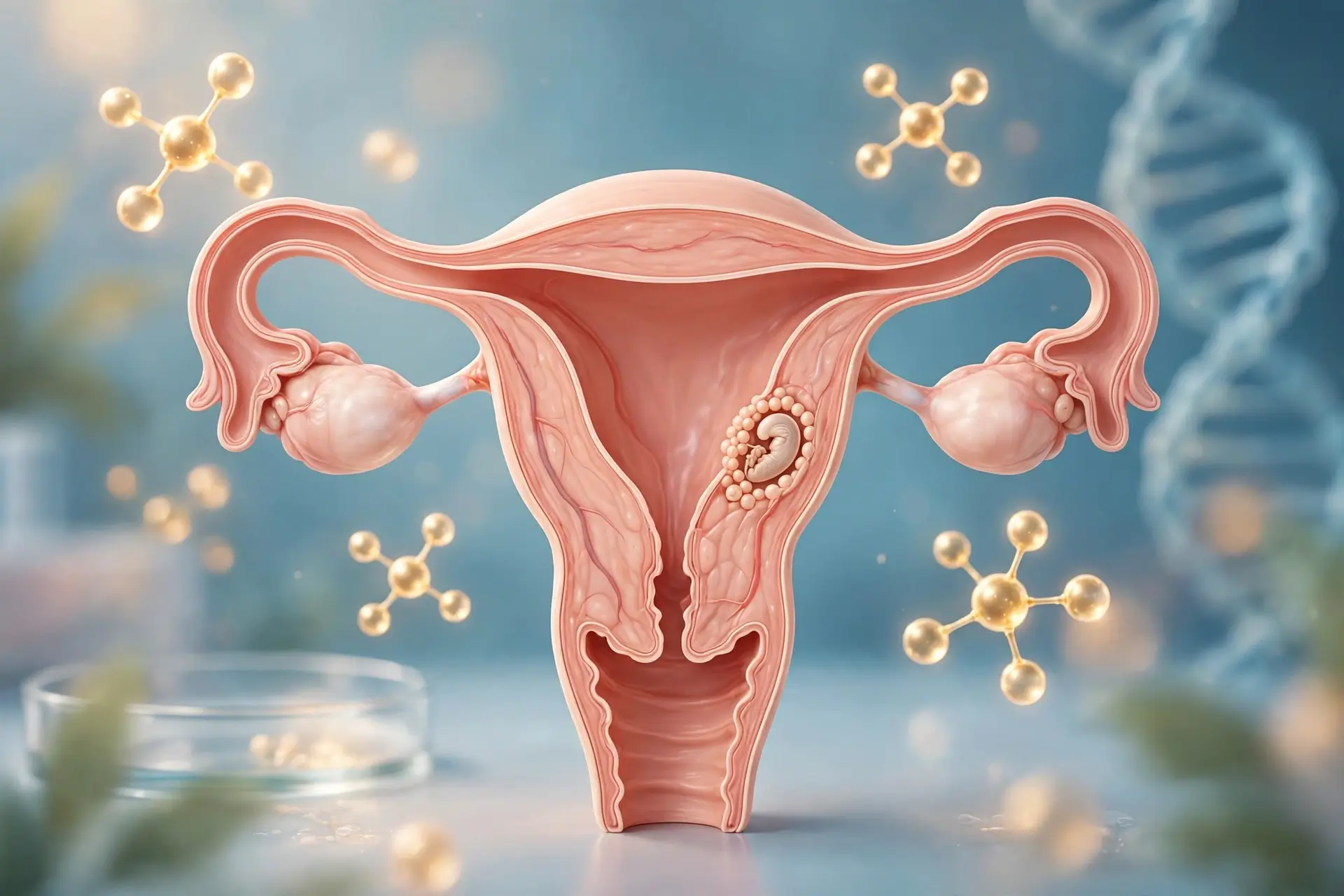
Progesterone is a crucial hormone for women planning to conceive, whether naturally or through Assisted Reproductive Technology (ART). It prepares your uterine lining, i.e., turning it into a receptive state, to support embryo implantation. The hormone also supports the early stage of your pregnancy, until the placenta takes over.
Your fertility expert will monitor progesterone levels after embryo transfer to ensure that the current progesterone treatment is adequate. If you, too, are undergoing IVF and are concerned about whether your progesterone levels are too low or too high, you are in the right place. In this post, we have discussed everything about normal progesterone after embryo transfer and what it means for your pregnancy.
What Is Progesterone? Why Is It Important For Pregnancy?
The corpus luteum, the egg follicle remnant, produces a vital reproductive hormone, progesterone, initially until the placenta forms and starts producing the hormone. Until the first half of your menstrual cycle, estrogen builds your uterine lining and thickens it.
Progesterone levels rise after ovulation. The hormone nourishes the already-thickened lining and stabilizes it, creating an ideal environment for the fertilized egg to implant and grow.
If a pregnancy occurs, progesterone levels keep rising to support the embryo’s implantation and early pregnancy. Its main job is to prevent the endometrium from thinning out and breaking down, as it normally does during menstruation.
If the egg isn’t fertilized or there’s no embryo, the corpus luteum doesn’t get the hCG signals to stay alive and keep producing progesterone to support the embryo. So, it dies within 9-14 days. This causes a sudden drop in progesterone. As a result, the endometrium sheds and the next cycle begins.
Why are Progesterone Supplements Needed During IVF?
Women need progesterone support after IVF. And there are many reasons why this supplementation is a part of almost all IVF treatment protocols. Here’s a look at some common reasons why it’s needed:
To Prepare Your Uterine Lining
In IVF, the egg is retrieved and fertilized outside the mother’s uterus. The embryo is created in a controlled and regulated laboratory environment. However, once it’s transferred into the uterus, it needs a perfect balance of reproductive hormones, especially progesterone, to implant. The hormone, as mentioned earlier, prepares and maintains the uterine lining, ensuring that it’s at an optimal stage to support implantation.
To Support Early Pregnancy
Fertility medicines containing progesterone provide adequate hormonal support your body needs to support early pregnancy. Normally, the placenta takes over the hormone production job by 8-12 weeks. However, in IVF pregnancy, the disrupted hormonal environment can affect your ovary’s ability to produce sufficient progesterone. This creates the need for supplementation.
To Compensate For Suppressed Hormonal Function
During IVF, you take medications to stimulate your ovaries to release multiple mature eggs at once. Once the eggs reach the desired size, a trigger injection is administered to achieve the final stage of maturity, so they can be retrieved. The fertility medicines, particularly the ones that prevent premature ovulation, can suppress the corpus luteum’s ability to produce enough progesterone.
This, along with the hormonal changes occurring during egg retrieval, can affect your body’s hormonal balance. When you don’t have sufficient progesterone levels after embryo transfer, the embryo may not get the right environment to implant, increasing the risk of IVF failure. This is why progesterone supplementation is needed to compensate for the low P4 levels.
Normal Progesterone Levels After Embryo Transfer
There are no specific progesterone levels that every woman undergoing IVF must have for a successful implantation. Ideal P4 levels depend largely on:
- The type of transfer
- The clinic’s treatment protocol
- Medication used
- When you take the blood test.
Fertility clinics usually set different P4 targets for women with fresh transfer, natural-cycle FET, and programmed FET. The route of medication administration matters here. Progesterone delivered through the vaginal route might be absorbed and distributed differently than injectable hormone.
The duration between starting progesterone supplements and taking a blood test also matters. A test taken soon after starting supplements might differ greatly from the test taken later.
The hormone is measured 7-8 days after administering the trigger injection. Normally, before ovulation, progesterone hormone measures less than 1 ng/mL and increases to 5–20 ng/mL during the luteal phase (once the corpus luteum starts releasing the hormone).
Many clinics consider progesterone levels less than 10 ng/mL to be normal around this time. The levels should drastically rise to 20–50+ ng/mL after embryo transfer, as you will be on external supplementation. After day 10-12 of the embryo transfer, the fertility expert may check your progesterone levels along with beta hCG. The beta hCG should continue to rise, while P4 must be steady or elevated.
Progesterone Levels After Fresh vs. Frozen Embryo Transfer: Are They Different?
A major factor that may affect your progesterone levels after IVF is the type of embryo transfer you have chosen. You may choose to have a fresh embryo transfer or freeze it for a while and have it transferred later. However, P4 levels may vary in both, and here’s why.
Progesterone After Fresh Transfer
A fresh embryo transfer means the embryo is transferred in the same IVF cycle when it’s retrieved and cultured. After fertilization, the embryo is placed in a specialized incubator, where it grows until it’s ready for a transfer.
Depending on the mother’s health and preference, the embryo can be transferred after it’s reached the blastocyst stage. In a fresh transfer, a corpus luteum may form, but the fertility medicines you’ve taken earlier can affect progesterone production.
So, progesterone supplements are usually needed at this stage to allow the embryo to not only implant, but for your pregnancy to continue developing until the placenta starts producing progesterone.
Progesterone After Frozen Embryo Transfer (FET)
Frozen Embryo Transfer refers to thawing previously frozen embryos and transferring them into your uterus. Whether or not progesterone after FET is needed depends on the type of transfer.
Natural-Cycle FET: For example, in a natural-cycle FET, ovulation occurs naturally, and the corpus luteum is produced, which supports progesterone production. However, additional progesterone support may still be needed to support implantation.
Modified-Cycle FET: In a modified-cycle FET, you are advised to take ovulation stimulation medication to trigger ovulation, which results in corpus luteum and thus progesterone production. Whether or not additional progesterone supplementation is given depends on the clinic’s protocol and your progesterone blood test.
Programmed FET: In a programmed FET, you may need estrogen and progesterone supplementation for implantation. Since ovulation is suppressed, there’s no corpus luteum structure that could produce progesterone. So, supplementation is required to increase the chances of implantation.
Low Progesterone After Embryo Transfer: What Does It Mean?
If your blood test shows lower than expected progesterone levels after embryo transfer, it could indicate inadequate hormonal support. Sometimes, the results can be due to the timing of the test, a missed dose, administration method, or simply inadequate dosage.
Your fertility expert might increase the progesterone dosage, change the way it’s administered, order another progesterone blood test, or adjust the treatment protocol. That said, a single test report showing low progesterone doesn’t mean the embryo has failed to implant.
It’s important to talk to your fertility doctor to interpret your results and discuss further procedures. Also, you can’t tell whether your progesterone levels are adequate based on your symptoms. Breast tenderness, bloating, and mood changes are all normal side-effects of hormonal changes after IVF.
Low progesterone levels can affect implantation, especially if you are on prescribed progesterone supplements. You don’t just need the right amount of progesterone exposure, but also at an appropriate time, so that the uterine lining becomes receptive to an embryo. Progesterone helps the endometrium reach the optimal stage, creating an ideal implantation window, or the period when the uterine lining is fully prepared to receive and nourish the embryo.
High Progesterone After Embryo Transfer: What Does It Mean?
A higher progesterone level may not always cause any problems with pregnancy, nor can it effectively tell that you are pregnant. Remember, a progesterone blood test can never replace the beta hCG test for confirming pregnancy.
It may mean that your body is absorbing the external supplementation well, explaining the rapidly increasing P4 levels. Sometimes, your ovaries continue to produce progesterone, and your doctor prescribes additional supplements just to ensure you are getting enough. This can lead to a sudden increase in your hormone levels.
The major effect it has on your pregnancy, according to NIH, is the change in the implantation window. With rapidly rising P4, your endometrial development might speed up, which in turn can shift the implantation window earlier than your expected duration. This may affect the decision about the best time to transfer the embryo.
Can Progesterone Levels Affect IVF Success Rate?
Progesterone levels and embryo implantation are closely connected because your embryo needs a receptive uterine lining to attach successfully and continue to grow. And while the hormone must rise steadily after transfer, there are no universal levels that every woman undergoing IVF must achieve to have a successful pregnancy.
Instead of comparing your test results with those of another IVF patient or the values you find on the internet, let the fertility doctor interpret the results. Besides, progesterone alone cannot determine IVF success. It’s one of the many factors that assess your pregnancy chances after IVF.
Progesterone Supplements: How Is It Administered?
The next common question is: how are progesterone supplements administered? There are two common options:
Vaginal Progesterone
Progesterone can be administered using capsules, tablets, gels, or pessaries into your vagina. These are carefully inserted into the vagina so that the medicine can reach your uterus and turn your endometrial lining into a receptive state for implantation.
With vaginal supplementation, the hormone levels may not show up in a blood test, which is why a low P4 in your blood test doesn’t necessarily mean your uterus isn’t getting enough hormone.
Injectable Progesterone
Injectable progesterone is administered either under the skin or into the muscle, depending on the type of medication used. Since the medicine enters the bloodstream directly, the changing P4 levels will appear in your blood test.
How Long Must You Take Progesterone After Embryo Transfer?
Your fertility expert will provide instructions regarding how long you should take progesterone supplements after embryo transfer. If it’s a fresh IVF cycle, you may need to continue it at least until the pregnancy is confirmed and during your early pregnancy. Mostly, doctors recommend continuing the supplementation for 8-12 weeks to support early pregnancy.
Some clinics stop the supplement around 12 weeks when your placenta has developed and is ready to take over the hormone production job, while others practice a ‘weaning’ method, where they may decrease the dosage before stopping it.
Do not stop the medicine on your own, or if you notice bleeding, cramps, or a negative home pregnancy test. Talk to your fertility expert if you notice any unusual symptoms or have a negative test. The doctor may ask you to stop the supplementation if your beta hCG report is negative.
Does Progesterone Cause Symptoms?
Yes, many women experience symptoms after starting progesterone supplements. And these symptoms are very similar to the ones you experience in early pregnancy. They mainly include:
- Fatigue
- Drowsiness
- Headaches
- Tender or swollen breasts
- Mild cramping
- Vaginal discharge
These symptoms are not reliable signs of a successful implantation. Sometimes, women notice all these changes, but implantation could fail due to underlying reproductive health issues.
Other women might experience no major change in their health after starting progesterone, yet still conceive successfully. So, symptoms must never be used as an indicator of a successful or failed implantation. You must get a P4 blood test for more accurate results.
What to do If You Have Low Progesterone Levels?
As mentioned earlier, low progesterone levels after IVF might seem concerning, but instead of acting impulsively out of fear, here’s what you must do:
- Do Not Panic: Low progesterone doesn’t necessarily mean there isn’t sufficient hormone for your uterine lining to be prepared for an embryo. There can be many reasons why a blood test could show low progesterone, which is why it’s important to consult a fertility expert rather than jumping to the worst conclusions.
- Note the Timing of the Test: The gap between your last progesterone dose and the blood test can make a significant difference to the results. You may need repeat tests if you take a test shortly after starting progesterone.
- Tell About the Progesterone Medicines You Are Taking: Share the medication name, dose, how you are taking it (vaginally or in an injectable form), and whether you have recently missed any doses.
- Follow Your Doctor’s Instructions: Your fertility expert may advise you to change the medication, try a different administration route, such as switching from vaginal pessaries or tablets to injections, or have a repeat test.
- Do Not Stop Medication: Do not make any changes to your dosage, medication type, or administration route without consulting with your doctor first.
- Take the Necessary Pregnancy Test: While a P4 blood test is important, it doesn’t reliably tell if you are pregnant or not. You may need a beta hCG test for a confirmed pregnancy diagnosis.
FAQs
- What’s an ideal progesterone level after embryo transfer?
Normal progesterone levels around the time you have an embryo transfer are 10 ng/mL or above, although if you are on progesterone supplementation, the normal range is between 20 and 50 ng/mL.
- When is the best time to check progesterone after embryo transfer?
Ideally, progesterone is checked before embryo transfer, on the day of transfer, and when you visit the clinic for a beta hCG test, i.e., between 9 and 14 days after transfer.
- Does increased progesterone cause any symptoms?
Yes, some people notice breast tenderness, fatigue, mood swings, and vaginal discharge.
- Can excessively high progesterone levels affect your implantation success rate?
Not always, but it can lead to premature aging of the endometrial lining or shift the implantation window.
- Can low progesterone after embryo transfer harm your chances of a successful pregnancy?
Yes, it can. Low progesterone might mean there’s insufficient hormone to prepare the uterine lining for implantation, increasing the risk of implantation failure.
- Can progesterone confirm pregnancy?
No, a stable progesterone level might mean everything is going well, but it doesn’t tell the complete fertility picture. Your hCG hormone should rise for a pregnancy to develop and thrive.
- Why do you need progesterone supplementation after embryo transfer?
Because hormone production is suppressed during IVF, the corpus luteum may not produce adequate progesterone to support early pregnancy. This is why supplementation is needed.
- Should I stop progesterone after a negative pregnancy test?
No, a home pregnancy test may or may not be accurate, especially if it’s taken too early. Wait until you take a blood test at a fertility clinic. Any weaning or stopping the hormone abruptly should be avoided unless your fertility expert instructs.
- Can progesterone supplements affect your baby’s gender?
No, it has no impact on your baby’s gender.
- What is progesterone belly?
Progesterone belly refers to swelling, bloating, and abdominal fullness. These are all temporary effects of progesterone supplements.
Final Words
Progesterone is an integral part of your IVF treatment. Depending on the treatment protocol and whether you choose fresh or frozen embryo transfer, progesterone supplementation may be needed to ensure your uterine lining is receptive to the embryo.
However, progesterone levels after embryo transfer alone can’t tell if the implantation was successful or not. Neither too high nor too low progesterone gives any vital clue about pregnancy. So, instead of adjusting the dosage or abruptly stopping the medication, you must talk to your fertility expert if you have any concerns.


2 Comments
Muhammed Ahmed
Assalam o Allikum
MA SHA ALLAH we have 4 kids, 3 Daughter and 1 Son.
Physically both are fit.
we wish a baby boy for completing our family.
I am not a rich man. I am simple account assistant in a real estate farm and dose not afforded so much fees recently i have receive a comety PKRs 80,000/-
If these rupees the process are possible then Please contact me
We both are at the age of 40
Regards
Muhammed Ahmed
ACIMC Webmaster
Dear,
We have experienced Consultants at ACIMC. Please come for a first free consultation with coordinator doctors.
For an appointment please call on our UAN: 0304-111-2229, WhatsApp: 0309-333-2229