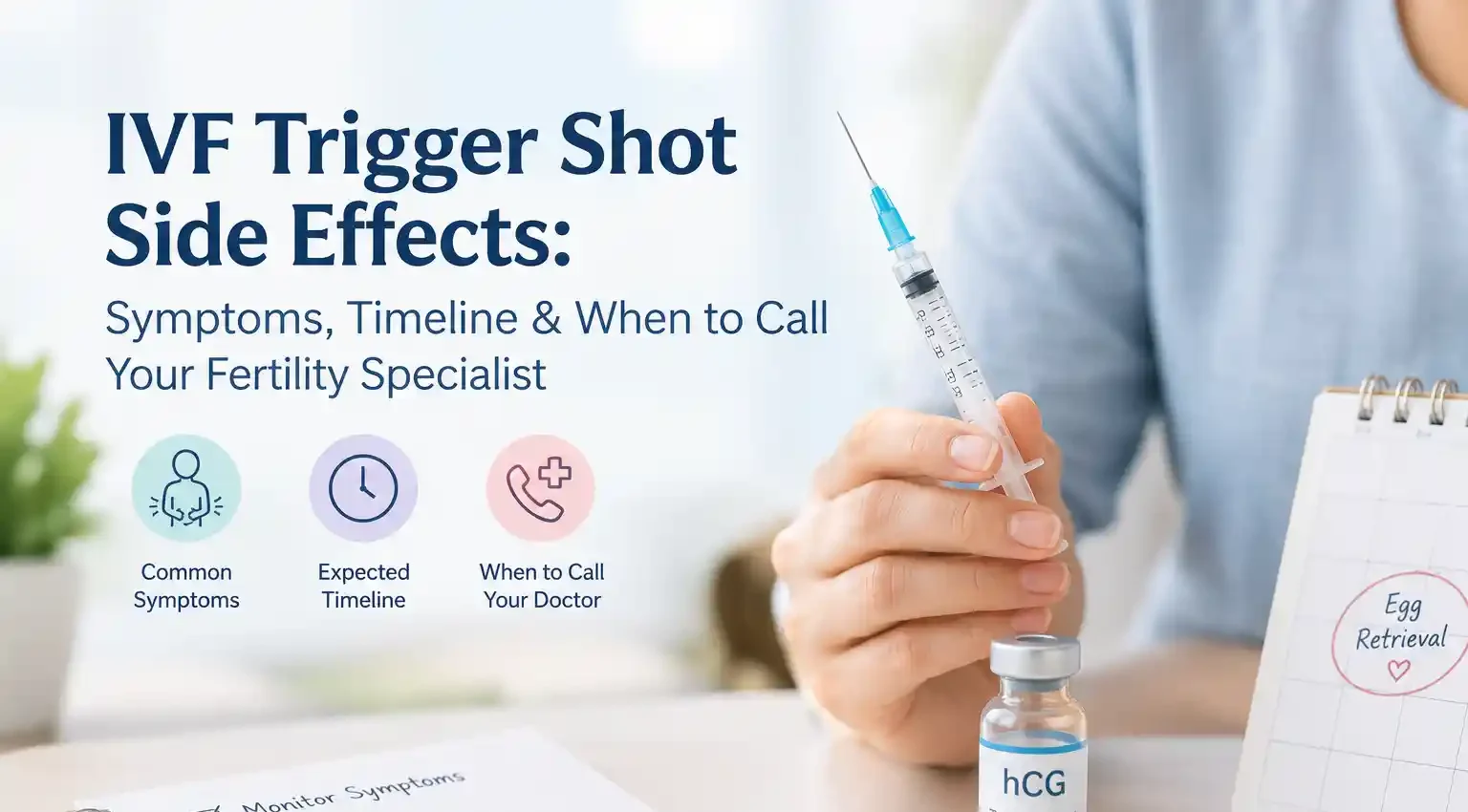
The journey to IVF starts with one simple decision, but it comes with a sea of information. Among the many terms that you may have never heard of before, one that frequently comes up during your consultations is an IVF trigger shot. What is it? When is it needed? And what exactly does it do?
Once you know about its role, your next big question will be “Does a trigger shot have side effects?” If you are concerned about IVF trigger shot symptoms, you are in the right place. We’ve covered everything you should know about trigger shot, what it does, the side effects they can cause, and which symptoms warrant a visit to a fertility specialist.
Trigger Shot: What Is It & How Does It Work?
Ovidrel, Pregnyl, and Novarel. A trigger shot is recognized by different names, but most contain Human Chorionic Gonadotropin (hCG). It’s a pregnancy hormone, but when used in a trigger shot, it acts like a Luteinizing Hormone (LH), giving your ovaries the signal to mature eggs.
Let’s understand the process in detail.
When your ovaries are stimulated with fertility medicines, they produce multiple follicles instead of a single follicle. These follicles continue to grow over the next few days. Their growth is continuously tracked with ultrasounds, and in some cases, hormone tests.
Once they reach an optimal size, which is around 18-22 mm, a trigger shot is administered. Note that the trigger injection doesn’t develop new follicles. It matures eggs within the existing follicles that have developed from stimulation medications.
The trigger shot initiates the final stage of egg maturation, thus preparing it for release. The entire process is carefully planned to prevent premature ovulation. Your fertility specialist will administer this trigger injection around 34-36 hours before the egg retrieval procedure is scheduled.
The goal is to mature the eggs and collect them from the ovaries before ovulation occurs. Lupron or GnRH agonist triggers have been widely used lately in Pakistan, particularly for women at an increased risk of Ovarian Hyperstimulation Syndrome (OHSS). The injection initiates the release of your body’s natural FSH and LH hormones, thus creating a significantly shorter hormonal surge than an hCG trigger.
Common IVF Trigger Shot Side Effects
Side effects, such as bloating or mild pelvic pain, can be experienced after a trigger shot. Knowing what’s normal and what may require medical attention is crucial. Here’s a simple table that explains IVF trigger shot side effects, which are common and uncommon, and how long they generally last.
| Side Effects | Normal or Abnormal | How Long They Last |
| Bloating | Common | 2-5 days |
| Mild Cramping | Common | 1-3 days |
| Tenderness at the injection site | Common | 1-2 days |
| Fatigue | Possible | A few days |
| Breast tenderness | Possible, especially with hCG trigger | Temporary |
| Pelvic Pressure | Common during retrieval | Temporary |
| Mood Changes | Common, often due to the entire IVF cycle, rather than the trigger shot alone. | Temporary |
These are general guidelines, not guaranteed side effects of trigger injection. Some women report nausea and vomiting, pelvic pain, and injection-site bruising from Ovidrel. Others report breast tenderness and fatigue from hCG triggers.
Besides, mild bloating doesn’t always mean something is wrong. It results from the multiple follicles developing in the ovaries, which might enlarge the ovaries, causing noticeable bloating.
Day-by-Day Timeline After the Trigger Shot
Here’s a look at the hourly breakdown of IVF trigger shot symptoms.
First 12 Hours
Many women do not feel much in the first several hours after the trigger shot. Some may notice mild soreness around the injection site. Bloating and pelvic pressure are also common, but they occur because of the enlarged ovaries from the previous stimulation cycle rather than the trigger shot itself.
12-24 Hours
Bloating may become more noticeable, but again, it’s from the multiple fluid-filled follicles in your ovaries. Mood changes are common and may occur because of the anticipation of the retrieval process.
24-36 Hours
As you get closer to the retrieval period, you may feel mild cramps and pelvic fullness, along with other mentioned symptoms. Do not switch medication timing and dose, or skip them.
Also, retrieval is strictly calculated from the time the trigger injection was administered. So, it’s important to visit the fertility center within the given timeline to prevent premature ovulation.
Retrieval Day
Your follicles have developed, the eggs inside them may have matured after trigger injection, and you will be ready for egg retrieval. It’s a short procedure in which the surgeon collects the mature eggs from your ovaries under sedation. Common symptoms after egg retrieval include pelvic pressure, mild cramping, spotting, and bloating afterward.
Do IVF Trigger Shot Symptoms Disappear After Retrieval?
Even after retrieval, the stimulation side effects can continue in some women. Your fertility expert will ask you to pay attention to your symptoms, as the risk of OHSS isn’t eliminated after retrieval.
In fact, symptoms tend to become more noticeable after egg retrieval, especially in women with a strong ovarian response to induction.
The use of hCG triggers can increase OHSS risk in some women, a complication from stimulation that can cause abdominal swelling, nausea, vomiting, and, in severe cases, breathing difficulties or reduced urine output. This happens when ovaries become unusually enlarged and the fluid leaks from the blood vessels into the abdomen.
Why Do Some Women Feel Tired After the Trigger Shot?
It’s not the trigger injection itself that causes fatigue, but the hormonal changes around the trigger combined with enlarged ovaries, which might make ordinary movements a little heavier.
Many women also experience difficulty falling or staying asleep. Preparing for egg retrieval or constant overthinking about fertilization and pregnancy can all contribute to disturbed sleep cycles. This can cause fatigue and irritability.
Can the Trigger Shot Cause a False Positive Pregnancy Test?
Yes, hCG trigger shots can detect a false pregnancy because the injection introduces hCG into your body, a pregnancy hormone that a home pregnancy test or blood test measures to know if you are pregnant.
While it may feel tempting to test early, know that triggers can generate false positives. It may also cause symptoms that overlap with pregnancy symptoms. Instead of testing too early, follow your clinic’s pregnancy testing protocol, which is usually two weeks after embryo transfer.
Trigger Shot Side Effects by Medication Type
The IVF trigger shot symptoms may vary in patients depending on the trigger injection used. Different drugs use different hormonal pathways. Here’s a quick comparison of the common drug-based side effects.
| Medication | Side Effects | OHSS Risk |
| Ovidrel | Tenderness around the injection site, nausea, bloating, and abdominal discomfort | Higher than GnRH agonist trigger |
| Pregnyl | Injection-site discomfort, fatigue, breast tenderness, and abdominal symptoms | Higher than GnRH agonist trigger |
| Novarel | Injection-site discomfort, fatigue, headache, and edema | Higher than GnRH agonist trigger |
| Lupron Trigger | Headache, nausea, fatigue, hot flashes, injection-site reactions | Low |
When Should You Call Your Fertility Specialist?
Though most IVF trigger shot side effects are common and not alarming, certain symptoms require medical attention. Watch out for these signs:
- Severe abdominal or pelvic pain
- Unusually swollen abdomen
- Persistent nausea and vomiting
- Less frequent urination than normal
- Difficulty keeping liquids or solids down
- Rapid weight gain (around 1.4 kgs in two days)
- Breathing difficulties
- High fever
- Severe weakness or fainting
Can You Exercise After the Trigger Shot?
Gentle movements aren’t usually restricted after trigger injection. You can stand, walk, and move normally. However, it’s different from strenuous exercises, jumping, running, swimming, or other activities that might put excessive pressure on your abdomen.
The restrictions are mainly because enlarged ovaries are at an increased risk of ovarian torsion, a complication in which the ovary might twist around the surrounding structures. Instead of sticking to your usual exercise routine, follow your fertility doctor’s activity restriction advice.
Foods to Eat After a Trigger Shot
Focus on hydration and your normal balanced diet. Remember, there’s no special food that can increase your IVF success, but a good diet and proper hydration can help you stay energetic and prepared for the next steps. Some women are advised to use electrolyte fluids as part of hydration.
Add protein to your diet with lentils, beans, chicken, fish, etc. Additionally, cooked vegetables and seasonal fruits can also keep you hydrated and nourished. Avoid smoking and alcohol (if you haven’t already quit), and limit your caffeine intake as advised by your fertility doctor.
Tips to Reduce Trigger Shot Side Effects
Simple home remedies or basic tips can make the period after trigger shots less uncomfortable. Here’s what you can try:
- Wrap ice cubes in a cloth and apply to the injection site to relieve soreness.
- Wear loose clothes, especially if you have abdominal swelling or pelvic discomfort.
- Rest as much as your body needs. Gentle movements are encouraged unless your doctor advises otherwise.
- Eat balanced, nutritious meals
- Sleep well
- Avoid high-intensity workouts or heavy exercises
- Take your medicines as prescribed
Most importantly, follow the trigger timing as advised by your fertility expert.
FAQs
What happens exactly 36 hours after the trigger shot?
The eggs may have completed the final step of maturation, and you will be all set for egg retrieval. The exact timing of the retrieval may vary depending on the medication used and your clinic’s IVF protocol.
Can I sleep on my stomach?
It may not be an issue unless your fertility team has said otherwise. You can sleep in a position that feels comfortable.
Is bloating a good sign?
Bloating is quite common during IVF, as your ovaries become enlarged from the multiple follicles growing inside them. However, bloating doesn’t tell whether you will conceive or not. Moreover, severe bloating along with vomiting or rapid weight gain must always be reported to your fertility doctor.
Is pelvic pressure normal?
Mild pelvic pressure is normal, but severe, sudden pain requires medical evaluation.
Can the trigger shot make me emotional?
Yes, mood changes can happen due to hormonal shifts, not necessarily because of the trigger, though.
Can I take acetaminophen?
It’s best to follow your doctor’s instructions. If you experience pelvic pain after egg retrieval, discuss the use of acetaminophen with your fertility expert.
Is spotting normal?
Yes, after egg retrieval, light spotting is normal. However, heavy or persistent bleeding should always be reported to the doctor.
Can I shower after the injection?
Yes, bathing doesn’t interfere with the trigger shot and its effects. You can generally take a shower after trigger injection unless your fertility doctor has specifically asked you not to.
Does everyone get side effects?
No, some women experience bloating, nausea, breast tenderness, and other side effects, while others may not experience much difference. The presence of side effects shouldn’t be taken as a sign that you are pregnant.
When should I worry?
Mild pelvic discomfort and some bloating during IVF cycles are not uncommon, but if you notice heavy bleeding accompanied by severe bloating, rapid weight gain, or persistent vomiting that makes it difficult to keep fluids down, you should seek medical help.
Conclusion
The trigger shot might seem like a small, quick step, but it plays an integral part in egg maturation. It prepares the egg for retrieval and allows your fertility specialist to time the egg retrieval based on the trigger timing.
Trigger-related side effects include pain at the injection site, bloating, pelvic discomfort, breast tenderness, fatigue, nausea, and vomiting. They are usually temporary, though. If you have any other questions regarding the use and side effects of trigger injection, contact our fertility experts at Australian Concept.







2 Comments
Muhammed Ahmed
Assalam o Allikum
MA SHA ALLAH we have 4 kids, 3 Daughter and 1 Son.
Physically both are fit.
we wish a baby boy for completing our family.
I am not a rich man. I am simple account assistant in a real estate farm and dose not afforded so much fees recently i have receive a comety PKRs 80,000/-
If these rupees the process are possible then Please contact me
We both are at the age of 40
Regards
Muhammed Ahmed
ACIMC Webmaster
Dear,
We have experienced Consultants at ACIMC. Please come for a first free consultation with coordinator doctors.
For an appointment please call on our UAN: 0304-111-2229, WhatsApp: 0309-333-2229