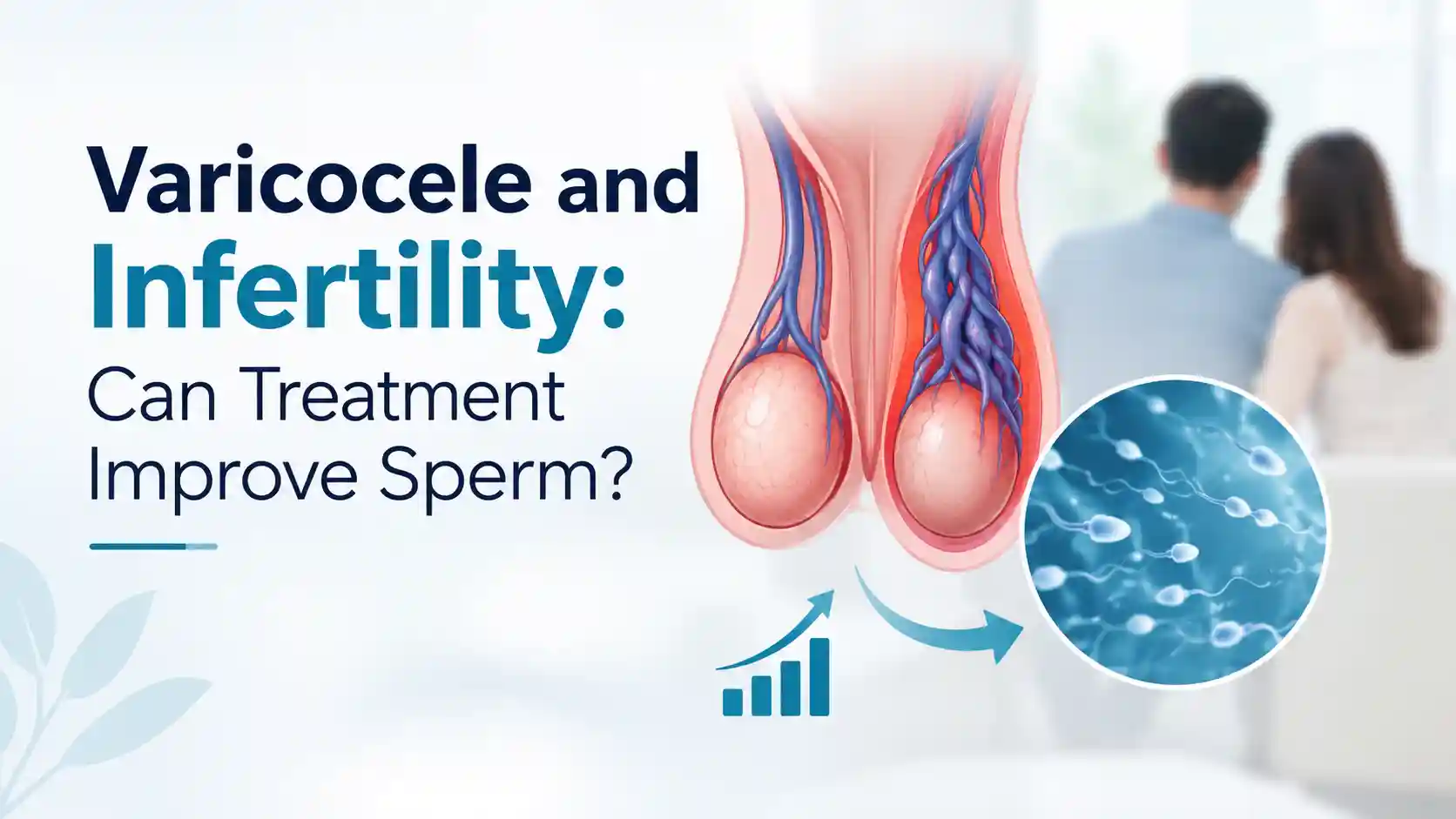
The enlarged veins around the scrotum often go undiagnosed until they are detected during male fertility tests. Research shows that 15% of men have varicocele and 40% of men with primary infertility have varicocele. For some men, varicocele isn’t a big concern, and it barely causes any fertility issues.
For others, changes in the scrotum can affect sperm production and quality. What’s important to note is that having varicocele veins doesn’t necessarily mean infertility. And whether or not it requires treatment depends on the size of the vein, symptoms, and your testicular health.
What Is Varicocele?
In simple terms, varicocele refers to the enlargement of the veins inside a man’s scrotum, a bag-like skin that holds the testicles. These veins are responsible for carrying blood away. The veins contain tiny valves, which ensure smooth blood flow in the proper direction.
When these valves malfunction, the blood, instead of flowing freely, gets collected within the vein. As a result, the vein becomes enlarged. These are somewhat similar to the varicocele veins in your legs, but instead of developing in the legs, they develop in the testicles.
They are usually on the left side, but can also develop on the right side, or both sides. Depending on their size, some can be felt during routine physical examination while others are detected through ultrasounds.
How Does Varicocele Affect Fertility?
Varicocele can affect a man’s fertility in more than one way. For optimal function, testes require a temperature that’s slightly lower than your core body temperature. It also has its own temperature-regulating system. When blood pools in the veins within your scrotum, its temperature-control mechanism is disrupted.
Varicocele can disrupt blood flow, which reduces oxygen-rich blood supply to the testicular tissue, further affecting sperm production. Additionally, it’s linked to damage to the sperm DNA.
Sperm DNA integrity is an incredibly essential part of sperm health, as it partly contributes to the genetic material of the embryo. That said, not every man with varicocele experiences all these changes in their testicular function.
Symptoms of Varicocele
Varicocele doesn’t usually cause noticeable symptoms, which makes it difficult to diagnose. In fact, many remain unaware of these enlarged veins until they see a healthcare expert for fertility evaluation and discover that they have a varicocele. However, symptoms might be present in some men. Here’s what people with symptomatic varicocele experience:
- Mild discomfort in the scrotum
- Pressure or heavy sensation, especially after standing for prolonged hours
- Veins that are considerably enlarged and can be felt
- Differences in the size of testicles
- Difficulty impregnating your female partner after regular sexual intercourse
Sometimes, the dull ache is felt in the scrotum, but it might disappear during rest.
How Is Varicocele Diagnosed?
Here’s how fertility doctors diagnose varicocele.
Physical Examination
The doctor may physically examine the scrotum to detect abnormalities or differences in the testicle sizes. You may be asked to apply heavy downward pressure, as you’d do during a bowel movement, so the enlarged veins can be felt easily.
As mentioned above, larger varicoceles are often felt easily during a physical examination. They feel like a twisted group of veins, often looking like a bag of worms. Small enlarged veins in the testicles may require imaging tests.
Scrotal Ultrasound
A scrotal ultrasound is a painless test that creates images of the inside of the scrotum, clearly showing varicocele veins if present. A Doppler ultrasound is another test that can assess blood flow through these veins.
Ultrasound is advised when physical examination doesn’t give meaningful answers, and your fertility expert wants to rule out other causes of lump, swelling, or pain in the scrotum.
Semen Analysis
To determine whether varicocele affects a man’s sperm parameters, a semen analysis may be ordered. The test gives your fertility doctor detailed insights into sperm details, such as sperm count, motility, morphology, semen volume, and other sperm characteristics.
Semen analysis can give clues about your sperm health, but it can’t confirm infertility. The test results may change over time, especially if lifestyle factors, such as disrupted sleep patterns, stress, smoking, and alcohol, are involved.
Does Varicocele Reduce Sperm Quality?
Varicocele might affect the sperm production process and sperm health in general, in different ways. Some notice changes in sperm parameters in their semen analysis, while others notice no effects on their fertility. Here are a few possible changes:
- Sperm Count: Enlarged veins can sometimes interfere with the normal temperature inside your scrotum, disrupting sperm production and reducing sperm count.
- Sperm Motility: Sperm cells are supposed to move in a forward direction to travel through the female reproductive tract effortlessly. Varicocele, in some men, can affect this movement.
- Sperm Morphology: Some abnormally shaped sperm are present in men with even normal fertility. So, don’t be worried if your semen analysis shows a slightly increased count of abnormal sperm. Morphology, alone, doesn’t decide a man’s fertility. Your fertility doctor will evaluate other factors instead of looking at the number of abnormally-shaped sperm alone.
Varicocele Treatment Options
Varicocele may not require treatment at all if it doesn’t cause any symptoms or fertility challenges. A doctor may advise treatment after considering testicular development, semen analysis results, ultrasound results, and your overall fertility status. Varicocele treatment may include:
Medication
There’s no specific medicine to treat varicocele, but if it causes pain and discomfort, pain-relieving medication can help. Simple changes in your clothing, such as wearing loose-fitting and breathable clothes, especially comfortable underwear, can make pain manageable. Again, pain medicines can only control pain, but it won’t improve fertility or address varicocele.
Varicocele Surgery
Varicocelectomy is a surgical treatment that involves identifying the problematic veins in your scrotum through a small incision on your groin or lower abdomen. The enlarged veins are tied off, sealed, or blocked to prevent abnormal blood circulation. The blood is then redirected through the healthier veins.
The goal is not to remove the veins altogether, but close them, ensuring healthy and normal blood supply and drainage of the testicles. While the surgery can be an effective treatment for varicocele repair, it may not automatically correct all fertility issues. Your fertility doctor will carefully review both partners’ reproductive health before recommending varicocelectomy.
Can Varicocele Treatment Improve Fertility?
The short answer is yes. A varicocele can be enough to improve a man’s fertility, especially if the clinically enlarged varicocele is sealed off. It may improve the temperature within the scrotum, thus normalizing sperm production. That said, it doesn’t work for all infertility cases.
So, when exactly does it work? Varicocele treatment delivers favorable results when varicocele is the only cause of a man’s infertility. If the vein significantly disrupts blood flow or elevates scrotal temperature, affecting sperm production, treatment may improve fertility outcomes.
Again, it’s important to note that varicocele doesn’t treat all causes of infertility. A man may have varicocele and other underlying fertility issues, which can negatively affect sperm production and quality. So, a thorough evaluation is necessary before considering treatment.
Varicocele and IVF Treatment
A treatment approach for men with varicocele-related sperm production issues is usually personalized. Some may see results after varicocele repair, while others may combine the surgery with assisted reproductive technology due to additional fertility issues. In some men, varicocele treatment is advised before a couple starts an IVF cycle.
The purpose is to regulate normal sperm production and increase the chances of fertilization during IVF. Assisted fertility procedures are recommended when you have severe male or female factor infertility, which won’t respond to other conservative treatments.
FAQs
Can varicocele cause complete infertility?
Varicocele can be a contributing factor to a man’s infertility, but it doesn’t always cause complete infertility. Many men with varicocele impregnate their female partners naturally.
Does every varicocele need surgery?
No, not every man with varicocele requires surgical treatment. Surgical repair is considered when there’s significant varicocele and evidence of impaired sperm production linked to enlarged veins.
How long after treatment does sperm improve?
It may take several months for new sperm production. Your fertility expert will guide you regarding when to re-take the fertility test.
Can men with varicocele have healthy babies?
Yes, many men with varicocele go on to have healthy babies either naturally or through assisted reproductive technology. Some also see results after varicocele repair. The treatment outcome depends on individual circumstances and the overall reproductive health of both partners.







2 Comments
Muhammed Ahmed
Assalam o Allikum
MA SHA ALLAH we have 4 kids, 3 Daughter and 1 Son.
Physically both are fit.
we wish a baby boy for completing our family.
I am not a rich man. I am simple account assistant in a real estate farm and dose not afforded so much fees recently i have receive a comety PKRs 80,000/-
If these rupees the process are possible then Please contact me
We both are at the age of 40
Regards
Muhammed Ahmed
ACIMC Webmaster
Dear,
We have experienced Consultants at ACIMC. Please come for a first free consultation with coordinator doctors.
For an appointment please call on our UAN: 0304-111-2229, WhatsApp: 0309-333-2229